
14 min read
Moving in the Hills District: What 15 Years of Local Moves Has Taught Us

By Nawar
Co-founder & Quoting — Two Brothers Removals · 15 August 2026
The Hills District is one of the most-moved-into parts of Sydney, and one of the trickiest to move within. In a single week our crews might carry a five-bedroom household out of a battle-axe block in Baulkham Hills, thre
Each of those moves needs a different plan. This guide sets out what actually determines how long your Hills move takes and what it costs — written from the jobs we have done, not from a generic checklist.
Two Brothers Removals has been moving Sydney households since 2009 and has completed more than 7,000 relocations, with over 1,800 five-star reviews behind us. If you want the short version, our Baulkham Hills removalist page covers service and coverage; this article is the detail behind it.These are the 1970s–1990s brick homes on 600–800 sqm blocks. They are the most underestimated moves in Sydney. The house itself is straightforward, but 25 years of accumulated life is not: the garage shelving, the pool shed, the roof cavity, the second fridge, the piano that has not moved since it arrived.
What lengthens these jobs is almost always the parts of the home nobody packs until the morning. If you do one thing before move day, clear the garage and the roof space first — not the bedrooms.
Access matters too. Long, steep or curved driveways are common through Baulkham Hills and Winston Hills, and a 12-tonne truck cannot always get to the door. When we can only park at the kerb, every item travels an extra 20–30 metres each way. That is real time, and it is worth telling your removalist about at quote stage rather than on the day.Since the Sydney Metro Northwest opened, the apartment stock around Castle Hill, Norwest and Bella Vista has grown enormously — and every one of those buildings has a loading dock, a service lift and a building manager with rules.
- Book the lift early. Most Hills buildings release service-lift slots in three or four hour blocks and they fill fast at month-end and on Saturdays.
- Check the dock height. Several Norwest and Castle Hill basements are height-restricted to around 2.1–2.6 m, which rules out a large truck. A shuttle run with a smaller vehicle is often faster than arguing with a boom gate.
- Ask about the bond. Many strata schemes require a refundable damage bond and proof of your removalist’s public liability insurance before they will release the lift.
If your driveway is fresh, tell us. We will park on the street and plan the walk instead. Our Kellyville, Rouse Hill and Marsden Park crews do these moves constantly.The other big Hills movement is downsizing — the four-bedroom family home going to a two-bedroom apartment or a move closer to the coast or the Central Coast. The mechanics are simple; the volume is not. Roughly speaking, a 4-bedroom home holds two to three times what a 2-bedroom apartment can absorb, so decisions have to be made before move day, not during it.
Book a council clean-up early. The Hills Shire Council runs booked clean-up collections and the waiting list stretches out at busy times of year. Charity pickups also need one to two weeks’ notice. Removal pricing in Sydney is hourly, and the honest answer is that the hourly rate matters far less than the number of hours. Two identical three-bedroom homes can differ by three hours based on packing readiness, stairs, driveway length and whether the garage was dealt with.
- Packing readiness. A fully packed, labelled home loads roughly 30–40% faster than a partly packed one.
- Access at both ends. Stairs, long carries, lift waits and kerbside-only parking all add time.
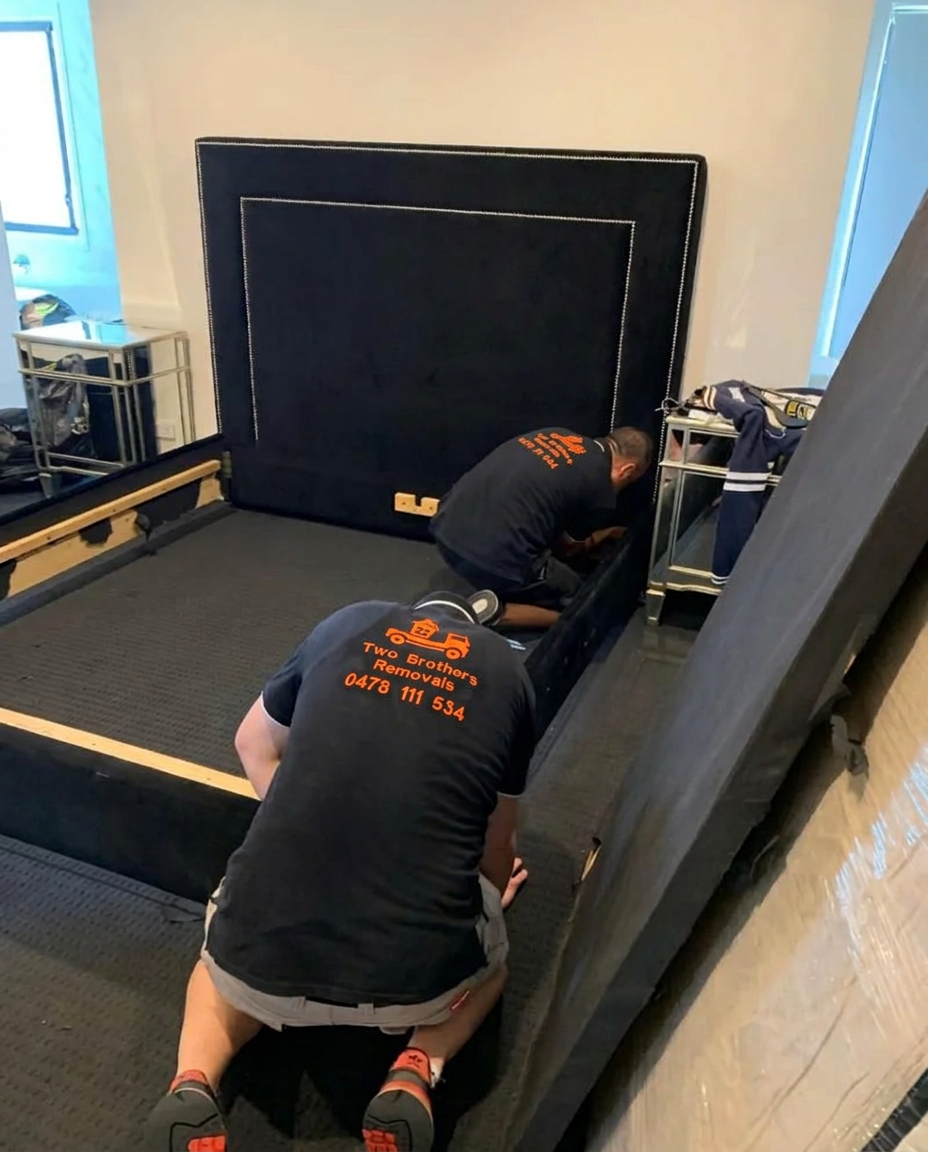
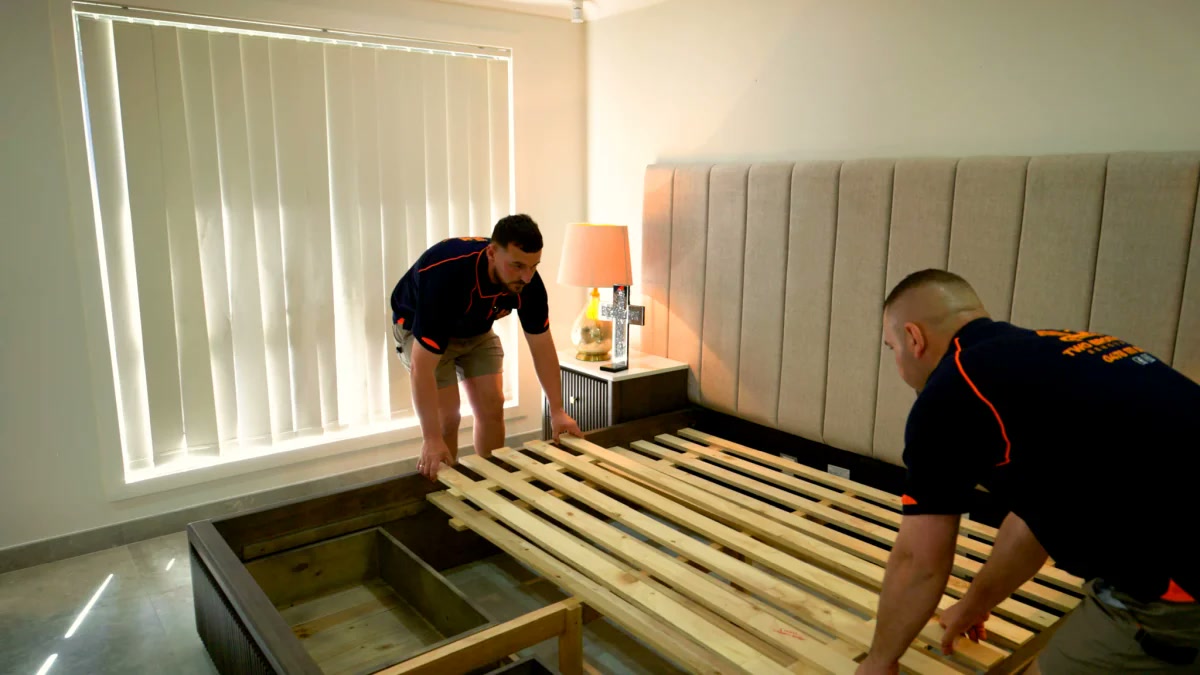
- Disassembly. Beds, wall units, trampolines and outdoor settings take time. Our crews carry the tools and include dismantling and reassembly in our home relocation
- Timing. The last weekend of the month and the last week before Christmas are the busiest slots in Sydney removals, in every year we have operated.
- Ask the building manager or strata for the move-in and move-out procedure in writing. Every building’s is different.
- Book the service lift. Slots are typically three to four hours and month-end fills first.
- Ask whether a refundable damage bond is required, and how much.
- Ask what insurance evidence they need from your removalist. Most want a certificate of currency for public liability. We can supply one — just tell us who to send it to.
- Confirm the loading dock height and the truck size it will accept.
- Confirm where the truck parks if the dock is unavailable, and whether a permit is needed for street parking.
- Check the distance from the dock to the lift, and the lift to your door. Long internal carries are the hidden cost of apartment moves.
- Confirm the building’s permitted hours. Many prohibit moves before 8am, after 5pm, or on Sundays entirely.
- Have the lift keys or fob ready when the crew arrives.
- Lift protection blankets are usually mandatory and usually supplied by the building. Check.
- Do not block the dock beyond your booked window — some buildings charge for it.
First, the apartment stock around the stations keeps growing, which means more moves involving docks, lifts and strata rules rather than driveways. If you have only ever moved houses, an apartment move is a different process and needs a week of preparation, not a day.
Second, proximity to a station has changed which suburbs people move between. We see far more moves within the district now — Baulkham Hills to Castle Hill, Kellyville to Bella Vista — as households trade a big block for a shorter commute. Short local moves are cheap in distance and expensive in access, so the planning effort belongs at both ends, not on the route. This is one of the most common jobs we run in the district, and the hardest emotionally as well as logistically.
Start earlier than feels necessary. Eight weeks is not too early to begin sorting a home that has been lived in for thirty years.
Work in categories, not rooms. All the books, then all the linen, then all the tools. Room-by-room sorting stalls because every room has a bit of everything.
Measure the new place first. Get the floor plan and the room dimensions and decide, on paper, which large pieces actually fit. The dining setting that has always been there may not go in.
Deal with the four hard zones early: the garage, the roof space, the shed, and the filing. These take the longest and get left the latest.
Book disposal in advance. The Hills Shire Council runs booked clean-up collections with real waiting times, and charity pickups need one to two weeks’ notice. Anything left over becomes a paid tip run.
Consider storage as a decision-delayer, not a decision. It is legitimate to store things you genuinely cannot resolve before settlement. It is expensive to store things you simply have not decided about.Our standard residential rate is $130 to $140 per hour for two removalists and a truck. Larger homes needing three or four crew are quoted on the job — and on a big Hills family home, the larger crew is usually cheaper overall, because the day finishes hours sooner.
Fragile and important items are shrink-wrapped, while other items are blanket-wrapped. Our crews use trolleys and straps and handle furniture dismantling and reassembly. Inclusions are set out on our packages page.
What is not in the hourly rate on any job, with anyone: packing materials if you want them supplied, and any waiting time caused by access problems nobody flagged in advance. That second one is the reason this article spends so long on driveways, docks and lifts.
- Crew arrives, walkthrough first. Every room, plus the garage, shed and roof space. Five minutes here saves an hour later.
- Big and heavy loads first. Lounges, whitegoods, wardrobes, mattresses. Boxes fill the gaps.
- You stay reachable, not underfoot. The most useful thing you can do is answer questions quickly.
- Keys, documents, medication, jewellery and devices travel with you, not on the truck.
- Do a final sweep before the truck leaves: roof space, under the house, the letterbox, the meter box, the back shed, the dishwasher.
- At the new place, direct traffic at the door. Telling the crew which room each item goes to as it comes off is faster than moving it twice.
- Ask for the ABN and confirm it on ABN Lookup.
- Ask what the insurance actually covers — public liability and goods in transit are different things.
- Ask whether the quoted rate includes travel time, and from where.
- Discuss your furniture protection and dismantling requirements before booking.
- Read reviews for the crew experience, not just the star count. Ours are on our testimonials page.
References & further reading
We check our advice against these Australian sources so you're not relying on one company's word.
- NSW Fair Trading — moving house and removalists — Your consumer rights when hiring a removalist in NSW.
- Australian Furniture Removers Association (AFRA) — Industry standards for removalist equipment, training and insurance.
- Australia Post — mail redirection — Redirect your mail before settlement or the end of your lease.
- Service NSW — change your address — Update your licence, rego and other NSW records.
- Safe Work Australia — manual handling and hazardous manual tasks — Why lifting technique and equipment matter on moving day.
- Insurance Council of Australia — home and contents cover — How contents and transit cover generally work in Australia.
Where to next
About the author: Nawar
Co-founder & Quoting — Two Brothers Removals
Nawar started with a single truck in Middleton Grange in 2009, and today he's the voice on the other end of the phone. He quotes almost every job we do, which means he has walked through, measured or asked about tens of thousands of Sydney homes — from Liverpool walk-ups to Oran Park new builds and Northern Beaches interstate loads.
His rule is simple: no surprises on invoice day. He works out how many hours a job honestly needs, tells you what could stretch it, and puts the inclusions in writing before you commit. He also handles insurance, licensing paperwork and the building forms high-rise moves always need.
- • Accurate hour-based quoting and move planning
- • Interstate and high-rise moves, building access forms
- • Insurance, licensing and customer care