
14 min read
Moving in Western Sydney: The Guide We Wish Every Customer Had Read First


By Saif
Co-founder & Operations — Two Brothers Removals · 25 August 2026
Western Sydney is not one moving market. A high-rise relocation in the Parramatta CBD, a four-bedroom family home in Glenmore Park and a first-home move into a Leppington estate have almost nothing in common except the t
Two Brothers Removals started in 2009 as a one-truck family operation in Middleton Grange. Fifteen years and more than 7,000 moves later, most of our work still comes from this half of Sydney — Liverpool, Fairfield, Campbelltown, Blacktown, Parramatta and the Macarthur region. This is what we have learned about moving well here.Parramatta is now a genuine high-rise city, and moving there means moving through buildings rather than driveways. Expect a booked service lift, a loading dock with a height limit, and a building manager who wants your removalist’s certificate of currency before the truck arrives.
Two habits save the most time. First, book the lift the moment you have a settlement or lease date — dock slots at month-end go quickly. Second, check the dock clearance; several CBD basements will not take a full-size furniture truck, and a planned shuttle beats an improvised one.
Roadworks are the other Parramatta variable, with Sydney Metro West construction reshaping traffic around the CBD and Westmead. We plan arrival times around it. Details on our Parramatta removalist page.This is Australia’s fastest-changing residential belt, and the moves reflect it: large new homes, wide but shared driveways, and estates still under construction. The recurring problems are freshly poured concrete (most driveways want around 28 days of curing before they carry a loaded truck), unsealed verges after rain, and tradie vehicles blocking frontages.
New-build moves also generate an enormous amount of packaging waste on day one. Blacktown City Council and the other Western Sydney councils run booked clean-up services, and booking before you move is far easier than after.
See our Blacktown and Marsden Park pages.Our home ground. The housing here is mixed — post-war brick homes, walk-up units, and the newer estates through Middleton Grange, Austral, Leppington and Edmondson Park.
The single most common surprise in this area is the walk-up unit block. A second-floor unit with no lift can add two to three hours to a move that looks small on paper, because every item is carried. If you are in one, say so at quote stage; we will send an extra pair of hands rather than run over time. More on our Liverpool removalist page.Penrith moves are typically larger homes with good access and longer travel distances. Distance itself is rarely the cost driver — a single well-planned trip in the right-sized truck beats two trips in a small one every time. Undersized trucks are the most expensive false economy in removals.
Summer heat is a real factor out here, where Penrith regularly runs several degrees hotter than the coast. For January and February moves we start early, and we ask customers to keep water and a working fan or air-conditioner available. See our Penrith removalist page.Campbelltown, Oran Park, Gregory Hills, Narellan and Camden are among the fastest-growing family areas in the state — the pattern is visible in the ABS regional population data. Most of our Macarthur work is families upsizing from apartments or older homes into new estates, with school terms driving the timing. The January and mid-year windows book out first.Older, denser housing stock with a very high proportion of walk-up unit blocks and semis on narrow streets. Two things dominate here: stairs, and parking. Many streets have no off-street parking at all, which means the truck sits on the road and every item is a carry. Where a street is genuinely too tight, we plan a shuttle. Our Bankstown page covers the area, and Revesby, Padstow and Condell Park sit in the same belt.This is Western Sydney’s commercial engine — warehousing, light industrial and business parks. If you are moving a business rather than a home, the constraints are dock heights, hardstand, forklift availability and racking installation dates rather than driveways. See our Smithfield page and our warehouse relocation service.More than a third of our Western Sydney work now involves a building with a manager — Parramatta, Liverpool, Blacktown, Bankstown and Campbelltown all have significant apartment stock.
- Get the building’s move-in procedure in writing. They all differ.
- Book the service lift. Slots are usually three to four hours, and month-end fills first.
- Ask about a refundable damage bond.
- Ask what insurance evidence the building needs from your removalist. We supply a certificate of currency on request — just tell us where to send it.
- Confirm the dock height and the largest truck it will take.
- Confirm where the truck parks if the dock is unavailable, and whether you need a street parking permit.
- Measure the carry: dock to lift, lift to door. Long internal carries are the hidden cost of apartment moves.
- Check the building’s permitted move hours. Many prohibit Sundays and anything before 8am.
The maths is simple: in a lift building, the crew moves a trolley-load at a time. In a walk-up, they carry individual items down a staircase, and the staircase is usually narrow with a turn in it. A two-bedroom unit that would take three hours on the ground floor takes five or six on the second.
- Tell your removalist the floor number and whether there is a lift. This is the single most important sentence in your quote conversation.
- Book more crew, not fewer. Four movers on a walk-up is cheaper than two, because the day is half as long.
- Move the boxes yourself in advance if you can. Boxes are the volume; the crew’s value is the heavy items. Shifting cartons down over the preceding week takes hours off the billable day.
- Check the stair width for large furniture. Corner lounges and king mattresses do not always come down a 1970s stairwell. If it came in through a window or a balcony, it is going back out the same way, and that needs planning.
- Reserve the parking outside. A truck parked fifty metres up the street adds fifty metres to every single trip.
- Start early. A 7am start regularly finishes a job that a 9am start pushes into the evening.
- Avoid the 3pm school run in the family suburbs, and avoid Parramatta Road and the M4 corridor at peak in either direction.
- Account for the distance. Penrith to Liverpool is not a local move. Neither is Blacktown to Campbelltown. Longer runs mean it is even more important to size the truck for a single trip.
- Watch the roadworks. Sydney Metro West construction continues to change traffic patterns around Parramatta and Westmead.
- Take the earliest start available.
- Have cold water at both ends, for your household and the crew.
- Make sure air conditioning at the new address is connected and working before the day.
- Keep candles, electronics, medication and anything heat-sensitive in your own car, not the truck.
- Arrange for pets and small children to be elsewhere. A house with every door open on a 40-degree day is not a safe place for either.
Fragile and important items are shrink-wrapped, while other items are blanket-wrapped. Our crews use trolleys and straps and handle furniture dismantling and reassembly. Full inclusions are on our packages page, and what customers say about the crews is on our testimonials page. Rough duration guide for a packed home with reasonable access :
Stairs, walk-ups, long carries and an unpacked garage are what push a job past these ranges.Renting. Your date is locked to a lease expiry, which puts you in the busiest slots — end of week, end of month. Budget for the end-of-lease clean and carpet steam clean as well as the removalist, and take photos of the empty property on the day you hand back the keys. The one saving genuinely available to you is the day of the week: a Tuesday move is easier to book and runs faster than a Saturday.
Buying. Your date is set by settlement, and settlements slip. Ask any removalist what happens if yours moves by a day before you pay a deposit — a company that charges a full cancellation fee for a settlement delay is a risk on a house purchase. If there is a gap between selling and buying, ask about storage in transit rather than trying to compress two moves into one week.The removalist invoice is not the whole cost of moving. Budget for packing materials, end-of-lease or pre-sale cleaning, utility connection and disconnection, mail redirection, tip fees for anything the council clean-up will not take, a day or two off work, and the takeaway you will inevitably order. If your dates do not line up, overlap rent or bridging costs are usually the largest hidden number in the entire move.
- Walkthrough first, including the garage, shed and roof space. Five minutes here saves an hour later.
- Heavy and bulky items load first; boxes fill the gaps.
- Stay reachable, not underfoot. Answering questions quickly is the most useful thing you can do.
- Keys, documents, medication, jewellery and devices travel with you.
- Final sweep before the truck leaves: roof space, shed, letterbox, meter box, dishwasher, under the house.
- At the new address, direct traffic at the door. Naming the destination room as each item comes off is far faster than moving it twice.
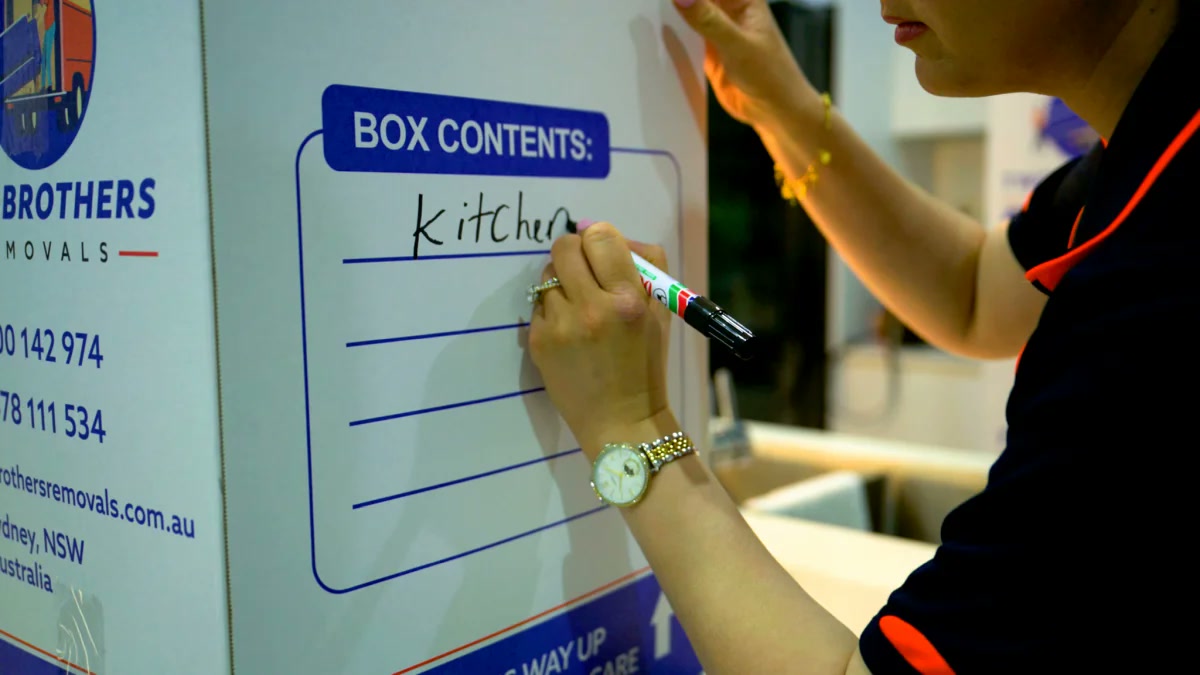
- Packing readiness. A fully packed and labelled home loads roughly 30–40% faster than one still being packed at 8am.
- Access. Stairs, lift waits, long carries and kerbside-only parking add up fast at both ends.
- Truck sizing. A second trip costs far more than the right truck the first time.
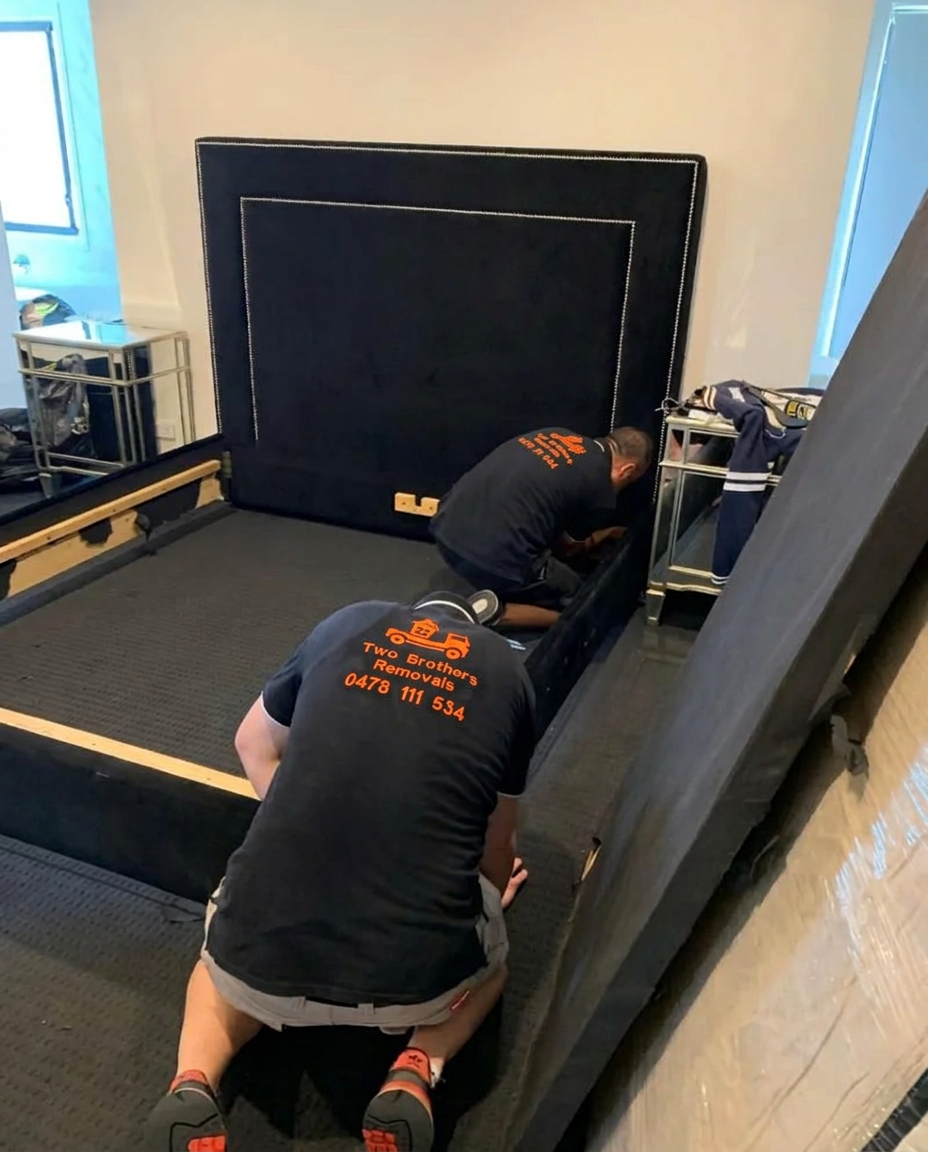
- Disassembly. Beds, wall units, trampolines and outdoor settings all take time. Fragile and important items are shrink-wrapped, while other items are blanket-wrapped. Our crews also handle furniture dismantling and reassembly.
- Timing. The last weekend of the month is the busiest slot in Sydney removals; mid-week and mid-month are cheaper to secure and easier to book.
- Confirm the ABN on ABN Lookup
- Ask exactly what the insurance covers — public liability and goods in transit are not the same cover.
- Ask whether travel time is included and charged from where.
- Discuss your furniture protection and dismantling requirements before booking.
- Get the quote in writing, with the hourly rate, the minimum hours and the crew size stated.
References & further reading
We check our advice against these Australian sources so you're not relying on one company's word.
- NSW Fair Trading — moving house and removalists — Your consumer rights when hiring a removalist in NSW.
- Australian Furniture Removers Association (AFRA) — Industry standards for removalist equipment, training and insurance.
- Australia Post — mail redirection — Redirect your mail before settlement or the end of your lease.
- Service NSW — change your address — Update your licence, rego and other NSW records.
- Safe Work Australia — manual handling and hazardous manual tasks — Why lifting technique and equipment matter on moving day.
- Insurance Council of Australia — home and contents cover — How contents and transit cover generally work in Australia.
Where to next
About the author: Saif
Co-founder & Operations — Two Brothers Removals
Saif is the one you'll usually meet on the driveway. More than 7,000 Sydney moves later he still runs the daily schedule, briefs each crew before they leave the depot, and jumps on the jobs with tight access, heavy pianos or a same-day deadline.
He built the way we wrap and load: blankets on every timber edge, mattress covers as standard, straps against the wall of the truck rather than through your furniture. If a job runs into a stairwell nobody measured or a lift the building forgot to book, Saif is the phone call that sorts it out while the crew keeps working.
- • Truck loading, load restraint and heavy-item handling
- • Same-day and tight-access moves across South Western Sydney
- • Crew training, uniforms and job briefings